
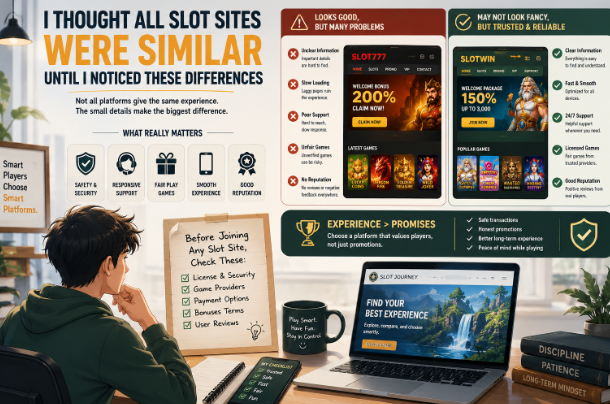
For a long time, I assumed every gaming platform offered basically the same experience. Open the website, create an account, browse games, and start playing. At first glance, most platforms can appear nearly identical. Similar layouts, colorful designs, large promotional banners, and endless promises often make everything blend together.
But after spending more time exploring different platforms and paying closer attention to how they operate, I started noticing something interesting: not all experiences actually feel the same.
Many people searching for situs slot terpercaya recommendations often focus immediately on bonuses or promotional offers. While those things can attract attention, they rarely tell the full story. The differences that truly shape user experience often appear in smaller details that people overlook during the first visit.
Once I started noticing those details, the platforms no longer felt identical.
The First Impression Usually Hides the Important Things
Most websites today know how to create a visually attractive first impression.
Large banners, animations, bright colors, and promotional sections are designed to catch attention quickly. But visual design alone does not determine whether a platform feels reliable or enjoyable over time.
In many cases, platforms with almost identical appearances can create completely different user experiences.
The important differences often appear after spending more time exploring.
Questions start becoming more relevant:
- Is navigation simple?
- Do pages load smoothly?
- Is information easy to find?
- Does the platform feel organized?
- Is the experience consistent across devices?
These small details seem minor individually, but together they shape overall comfort.
Good experiences often feel invisible because everything simply works naturally.
User Experience Matters More Than Most People Think
People sometimes underestimate how important usability can be.
When platforms become difficult to navigate, overloaded with unnecessary elements, or confusing to understand, users often leave quickly.
Modern audiences expect convenience.
Younger users especially have become accustomed to apps and digital experiences that feel smooth and intuitive. Social platforms, streaming services, and gaming applications have trained people to expect simplicity.
As a result, users increasingly appreciate platforms that remove friction rather than create it.
Clear menus, responsive design, faster loading speeds, and logical layouts create a stronger experience than many people realize.
These factors may not immediately stand out, but users often notice them subconsciously.
Mobile Experience Changed Everything
Years ago, most users interacted with websites primarily through desktop devices.
Today, behavior looks very different.
Many people now access digital platforms directly through smartphones. This shift completely changed expectations.
Mobile users want:
- Faster loading
- Cleaner interfaces
- Simple navigation
- Responsive layouts
- Easy accessibility
Platforms that ignore mobile experiences often feel outdated.
This becomes especially noticeable when comparing experiences side by side. Some websites still feel designed for older browsing habits, while others adapt naturally to modern user behavior.
The difference becomes obvious very quickly.
Community and Reputation Say More Than Advertising
Another thing I gradually realized was that community conversations often reveal more than promotional material.
Advertisements naturally focus on strengths.
Communities discuss experiences.
Users frequently talk about responsiveness, platform consistency, ease of use, updates, and overall satisfaction. Reading conversations and observing patterns often reveals insights that marketing pages never mention.
People tend to trust experiences shared by others because real discussions usually include details that polished advertising overlooks.
Over time, reputation becomes one of the strongest indicators of long-term quality.
Small Features Create Bigger Differences
At first, small details may not seem important.
But over time, they become surprisingly noticeable.
Features like personalized settings, cleaner account management, better organization, user-friendly interfaces, and smoother experiences often shape overall satisfaction more than giant promotional banners ever could.
The difference is similar to comparing two apps that appear identical at first glance.
One simply feels easier to use.
And that feeling matters.
Users may not always explain exactly why they prefer one platform over another, but comfort often influences long-term behavior more than people expect.
Sometimes the Biggest Difference Is Trust
The most interesting realization was understanding that trust rarely comes from a single feature.
Trust usually develops through consistency.
Reliable experiences, transparent information, smooth interaction, and long-term user satisfaction gradually create confidence over time.
At first, I genuinely thought every platform looked the same.
But once I started paying attention beyond surface-level appearances, I realized the differences were there all along.
Some experiences simply feel better—not because they promise more, but because they work better in ways users quietly notice every day.